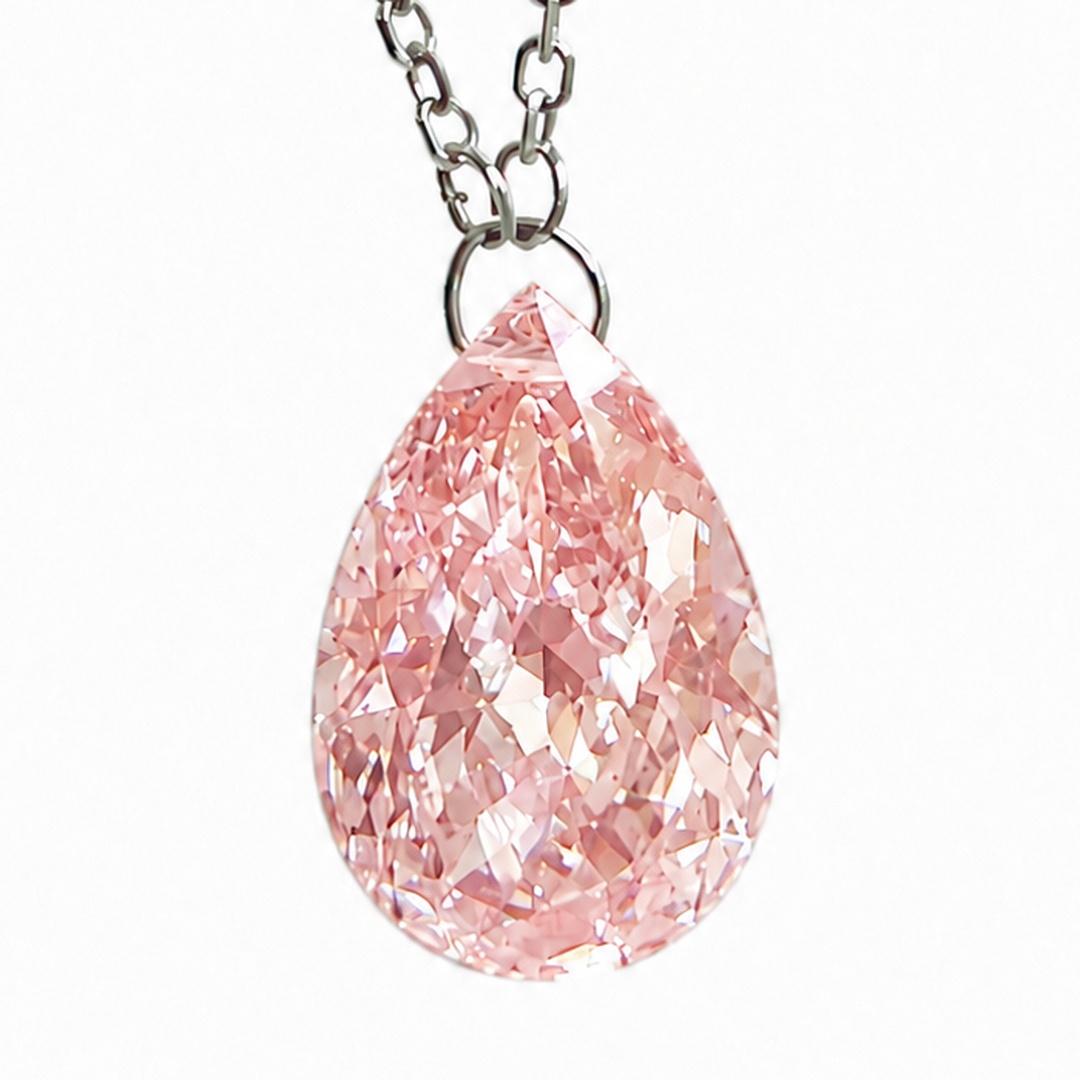
Precision and Restraint
See the diamond, not the setting.
The engineering is purposeful, but the finished effect is visually quiet. The viewer sees the stone before noticing how it is supported.
The idea behind the design
Traditional diamond pendants often use visible metal to hold the stone. That metal can be beautiful and expressive, but it also becomes part of the visual composition. Floating Diamonds begins with a different question: how much supporting structure can recede while the diamond remains secure and visually prominent?
The answer is precise construction with discreet support, allowing the setting to remain visually quiet. The design does not attempt to make the diamond look larger or disguise its shape. It removes visual competition so the actual stone can be read more clearly.
Why discreet support matters
The support is central to the architecture of the necklace. Its placement allows the stone to remain visible without the broader frame associated with many pendant settings. Precision matters because every element influences the final balance: the position of the diamond, the way it hangs from the chain, and how little support remains visible from a natural viewing distance.
The process is designed around the finished visual effect. Its purpose is easy to understand at a glance. The diamond appears suspended, the chain remains fine, and the eye is drawn to a single point of light.
Discreet support is part of the architecture
Its floating appearance comes from the way the traditional setting and prongs visually disappear around the stone. Nearly invisible support keeps the diamond secure while preserving its open silhouette.
The design is easiest to understand in person. A live demonstration lets the viewer inspect the discreet support from several angles and see why the diamond appears suspended against the skin.
Precision creates the structure. Restraint reveals the diamond.
Light from more than one angle
Diamonds are cut so their facets interact with light. Viewing the necklace from several angles can reveal different facets. The discreet support keeps the diamond in focus.
The effect depends on the actual environment. Soft interior light may create a gentle glow. Direct light may produce sharper flashes. Neither response needs an oversized frame or added ornament. The diamond remains the visual focus.
The role of the chain
A discreet 14k gold chain completes the composition. Its fine profile allows it to recede while maintaining a clear line around the neckline. The chain is not treated as a separate decorative statement. It works with the scale and position of the diamond so the finished piece feels balanced.
Chain color can also influence how the necklace reads. A warm gold tone can echo a yellow or pink diamond, while a cooler tone can create a crisp relationship with white or blue. The defining quality remains consistent: the stone should appear visually open, free from a heavy surrounding setting.
Diamond color and silhouette
The signature collection includes white, yellow, pink, and blue IGI certified lab grown diamonds. Pear, oval, and marquise silhouettes remain legible even when the setting recedes. Their forms give each color a recognizable presence while the support remains discreet.
Color changes the mood rather than the underlying technology. White feels luminous and clear. Yellow appears warm and bright. Pink is soft and expressive. Blue offers a cooler, more unusual accent. Every version is built around the same objective: preserve the diamond as the central point of attention.
Explore white, yellow, pink, and blueWhat to look for during a viewing
First, view the necklace at a natural distance and notice the overall silhouette. Then look more closely at the point where the diamond meets its support. View the necklace from several positions and compare the effect in soft and direct light if possible. Finally try more than one color or shape against the neckline.
Authorized retail partners can help demonstrate the design and explain what is currently available in store. Because selection can change, contact the retailer before visiting if you hope to see a particular color or silhouette.
Find an authorized retailerEngineering that becomes visually simple
The Floating Diamonds concept is defined by restraint. The process is precise, but the result does not look technical. It looks like a diamond suspended from a fine chain. That clarity is the purpose of the engineering: support the stone quiet the structure and reveal the brilliance already present in the diamond.
Shoppers may describe this appearance as a prongless diamond necklace, a prong free diamond pendant, or a diamond necklace without visible prongs. Each phrase points to the same visual goal, while the discreet support explains how the Floating Diamonds result is achieved.
Understand prongless design