The collection, explained
Floating diamond earrings
Floating diamond earrings leave the lower diamond visually exposed, so its shape is easy to see. Choose a short stud, a long stud or a hoop, then explore the color and gold combination you want to wear.
The difference is in the whole earring, not just the stone. A round white stud, a fine chain or a polished hoop changes the line above the lower diamond. This guide compares those choices and explains what to look at when you see a pair in person.
Look at the lower diamond
What does floating mean?
Here, floating describes the appearance of the exposed lower diamond. A traditional setting does not form a visible frame around that stone. The connector is still part of the design, but the diamond outline remains the main feature.
That distinction matters with stud styles. The upper round white diamond is held by exactly three prongs. The lower diamond is exposed beneath it. These earrings should not be described as an entirely prong free assembly: the stud top has a visible setting, while the lower diamond creates the floating appearance.
Look at both parts together, then look closely at their connection. Our guide to how Floating Diamonds works explains the broader design approach. A retailer can show you the actual pair from the front and side.
One combination. Three silhouettes.
Short stud, long stud or hoop?
The catalogue views below use the same pink pear diamond and white gold combination. Keeping those choices constant makes the different attachments easier to compare. Open any pair to see the full size view.
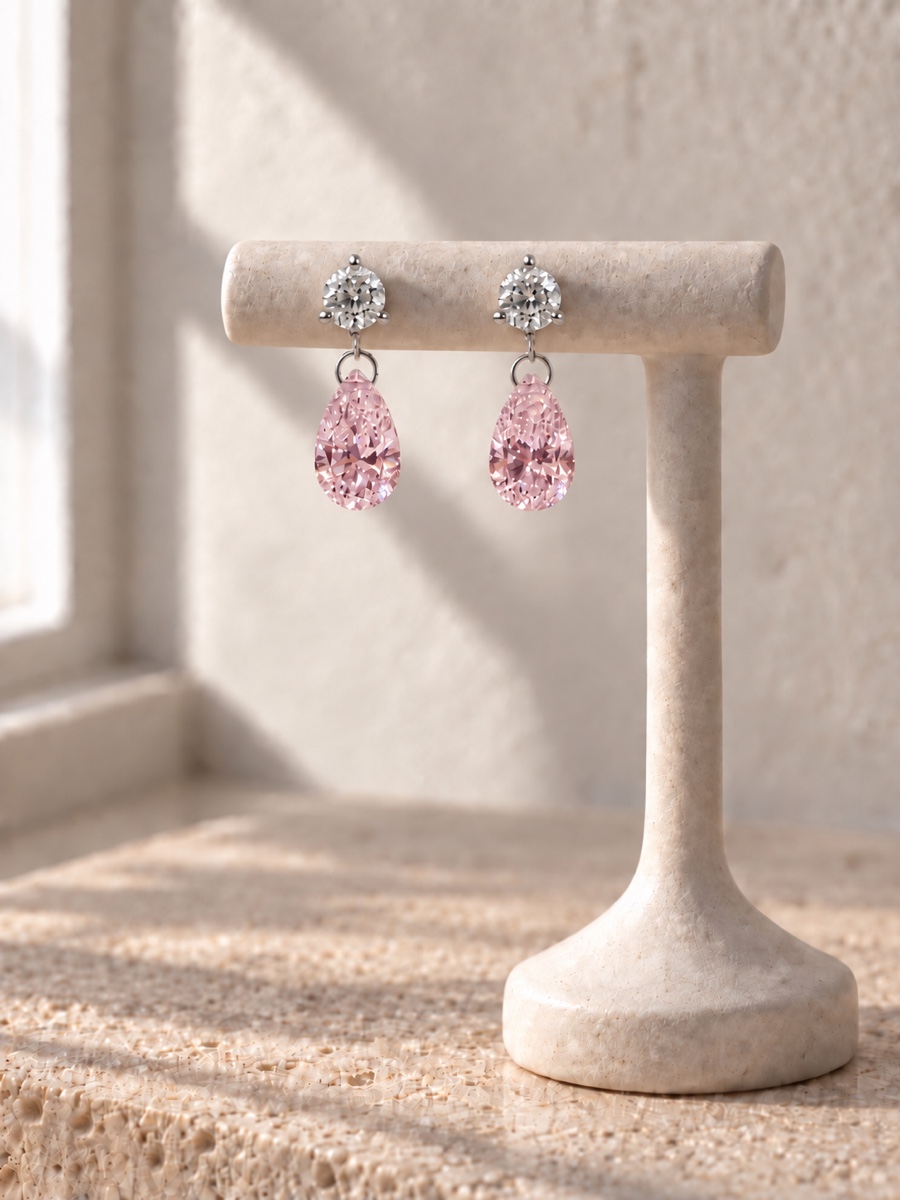
Short stud drop
The pear sits just below the round white stud, joined by a small connector. There is little visible distance between the two diamonds. Start here when you want to compare a close grouping with the longer line of the chain style. Notice how the round top and pointed pear sit together rather than judging the lower stone alone.
Explore stud drop styles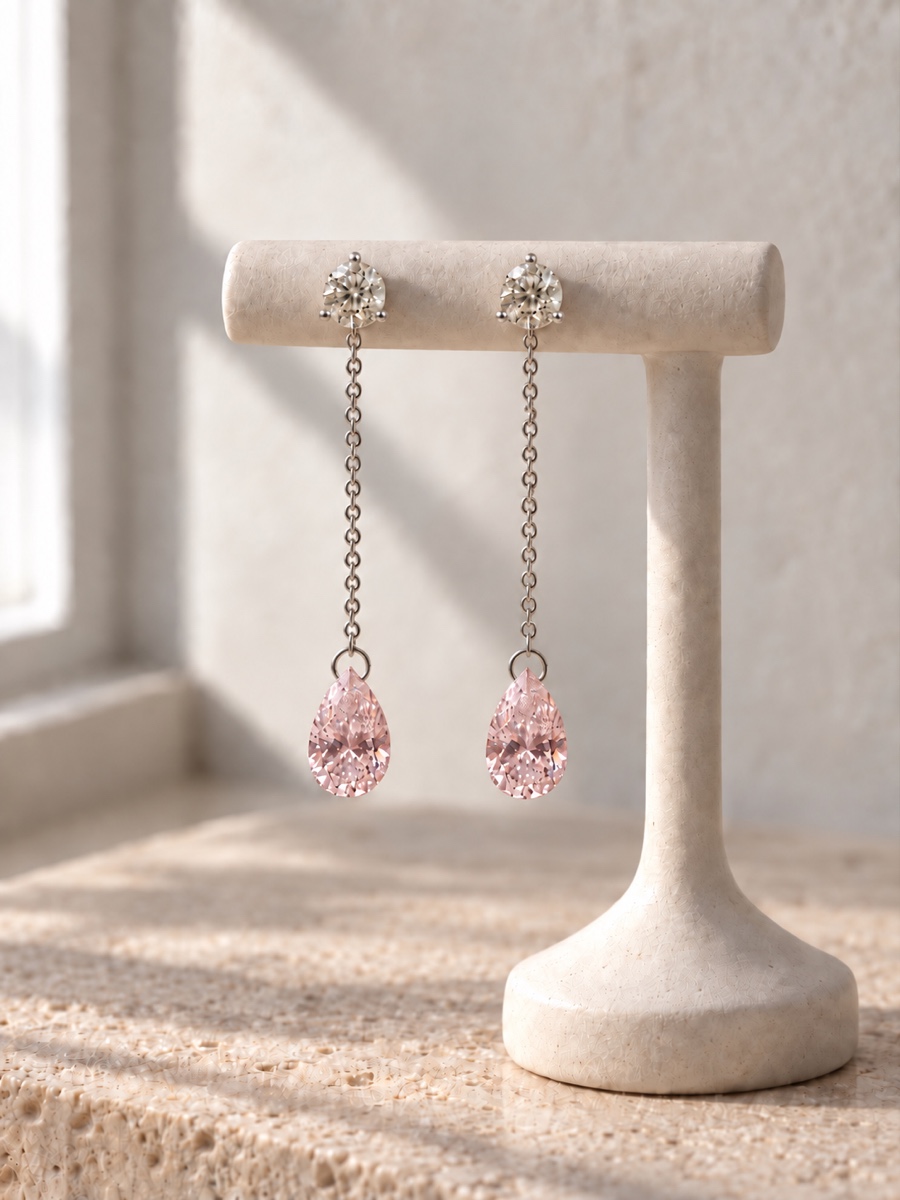
Long stud drop
A fine chain separates the round white stud from the lower pear. The chain adds a visible vertical line and places the pink diamond farther below the top. Compare this version in a mirror with your hair as you normally wear it. The question is where you want the lower diamond to appear within the overall outline.
Explore stud drop styles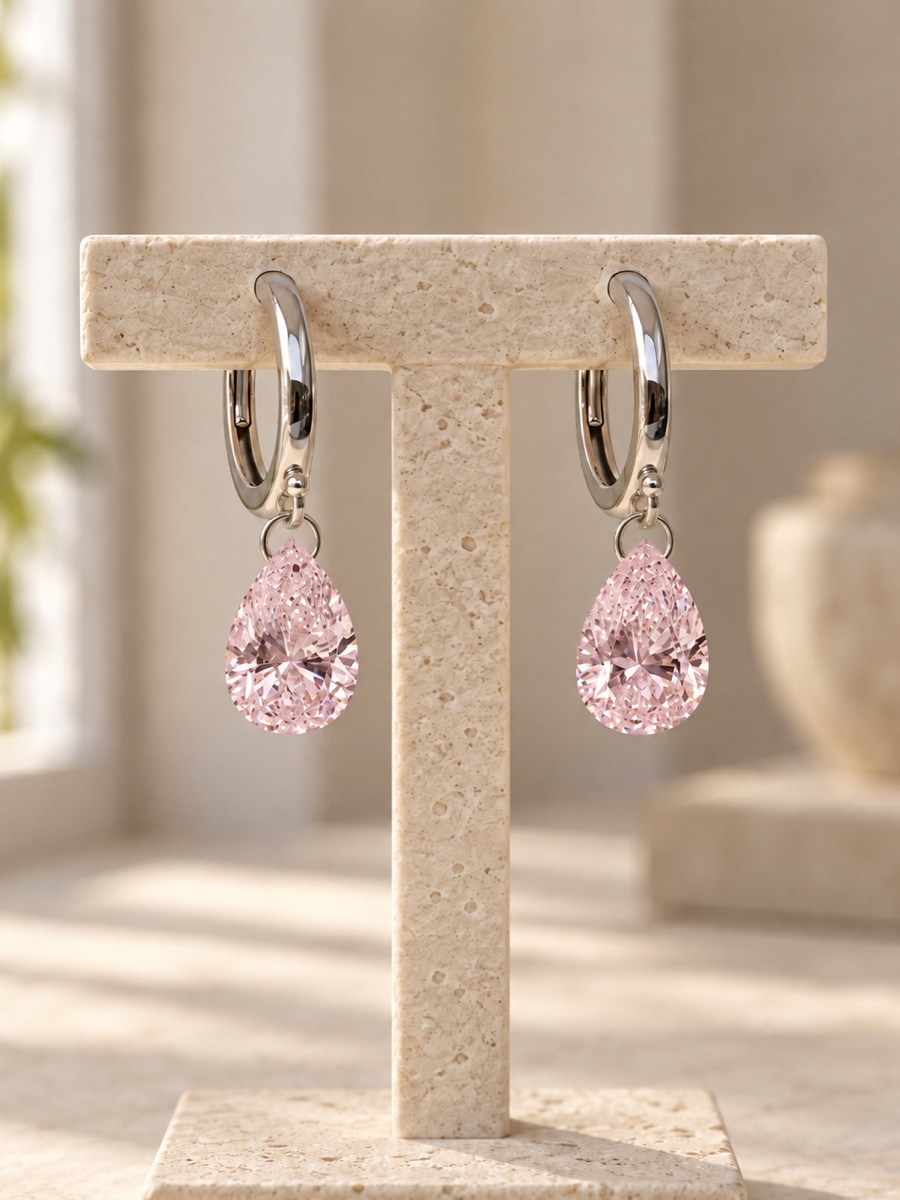
Hoop drop
A polished gold hoop replaces the round diamond stud. The lower pear hangs beneath the hoop through its connector, leaving the curved gold form visible above the stone. Compare the hoop outline with the two stud designs. This is a different upper structure, not simply a longer or shorter version of the same stud.
Explore hoop drop stylesCatalogue views explain the design, but they are not a size chart. Judge scale with the actual pair rather than comparing how large the stones appear on your screen.
Make the comparison your own
Shape first. Then color.
Pear, oval and marquise change the lower outline. A pear has a rounded end and a point. An oval has a continuous curved outline. A marquise narrows toward a point at each end. Compare the same shape across styles before changing several details at once.
The collection offers white, yellow, pink and blue lab grown diamonds, with 14K white gold or yellow gold. In the stud designs, the upper diamonds are round and white; the lower diamond carries your chosen color and shape.
Keep the lighting similar while comparing colors, then look again in another part of the store. For context beyond the catalogue, read how diamonds get their color. That explanation does not establish the treatment history of a particular stone.
Read the number carefully
What four carats means
The catalogue lists each earring pair as 4 ct total set weight. This is the listed total for the pair, not four carats per earring. Do not infer an individual stone weight or a specific split between the upper and lower diamonds from that number.
Carat measures weight, not a fixed visible size. Shape and proportions affect how a diamond looks. GIA explains the difference between carat weight, visible size and total carat weight. Ask the retailer for the details of the exact pair you are considering rather than estimating measurements from a catalogue view.
Before you choose
See the whole pair in person.
Tell the retailer which style, shape, diamond color and gold color caught your eye. Ask which examples they can show you. If trying on is available, use a mirror to compare the pair as well as the close detail. A few specific questions make that visit more useful:
- Can I compare the short stud and long stud in the same shape and color?
- How does the hoop outline look beside the stud top?
- Can you show the connector and the upper stud prongs from the side?
- What are the listed stone details for this exact pair?
- Which gold and diamond color combinations can you show or discuss?
Then step back from the close view. Consider where the lower diamond sits, how the pair looks with your hair and neckline, and whether you prefer the gold hoop or the round white stud above it. There is no need to choose every detail from a screen.
Your next step
Find your pair.
Browse the complete collection, note the combinations you want to compare, and contact a retail partner before visiting. A listing on the retailer map does not promise that every style is in that store. The retailer can confirm what is available to view.