In this article
Color begins inside the crystal
A diamond's color often starts with something much smaller than an inclusion you can see through a loupe. Atoms other than carbon, or changes in the arrangement of the crystal, can alter which wavelengths of light it absorbs. The light that reaches your eye then has a different balance of colors. [1] [2]
Gemologists call these features defects. In this context, the word describes a departure from an ideal crystal structure. It does not mean that a colored diamond is broken. [2]
Understanding those mechanisms helps explain a color, but it cannot identify a particular stone from its appearance alone. A blue diamond on a screen gives you a visual impression. Establishing how it formed and whether its color was changed requires evidence about that diamond.
Why nitrogen can make a diamond yellow
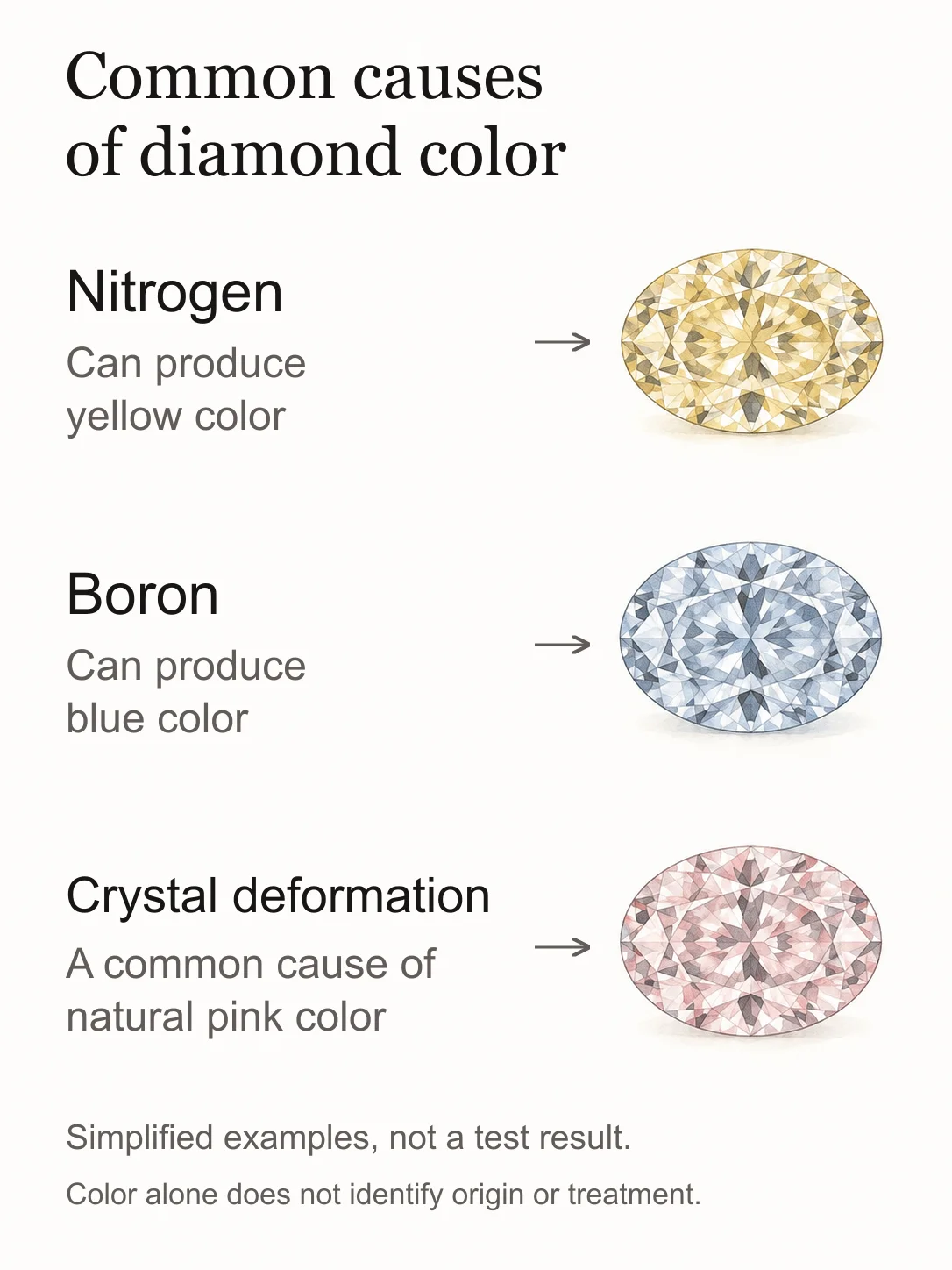
Nitrogen atoms can occupy positions normally held by carbon. Certain arrangements of nitrogen cause a diamond to absorb light toward the blue end of the visible spectrum, leaving a yellow appearance. Both the arrangement and concentration of these defects matter. Some nitrogen arrangements produce no visible color at all. [1]
The familiar explanation that nitrogen makes diamonds yellow is therefore incomplete. It leaves out how the nitrogen is arranged. GIA's research describes several mechanisms for yellow and orange color, including isolated nitrogen atoms and more complex combinations involving nitrogen and vacant positions in the crystal. [1]
Why many blue diamonds contain boron
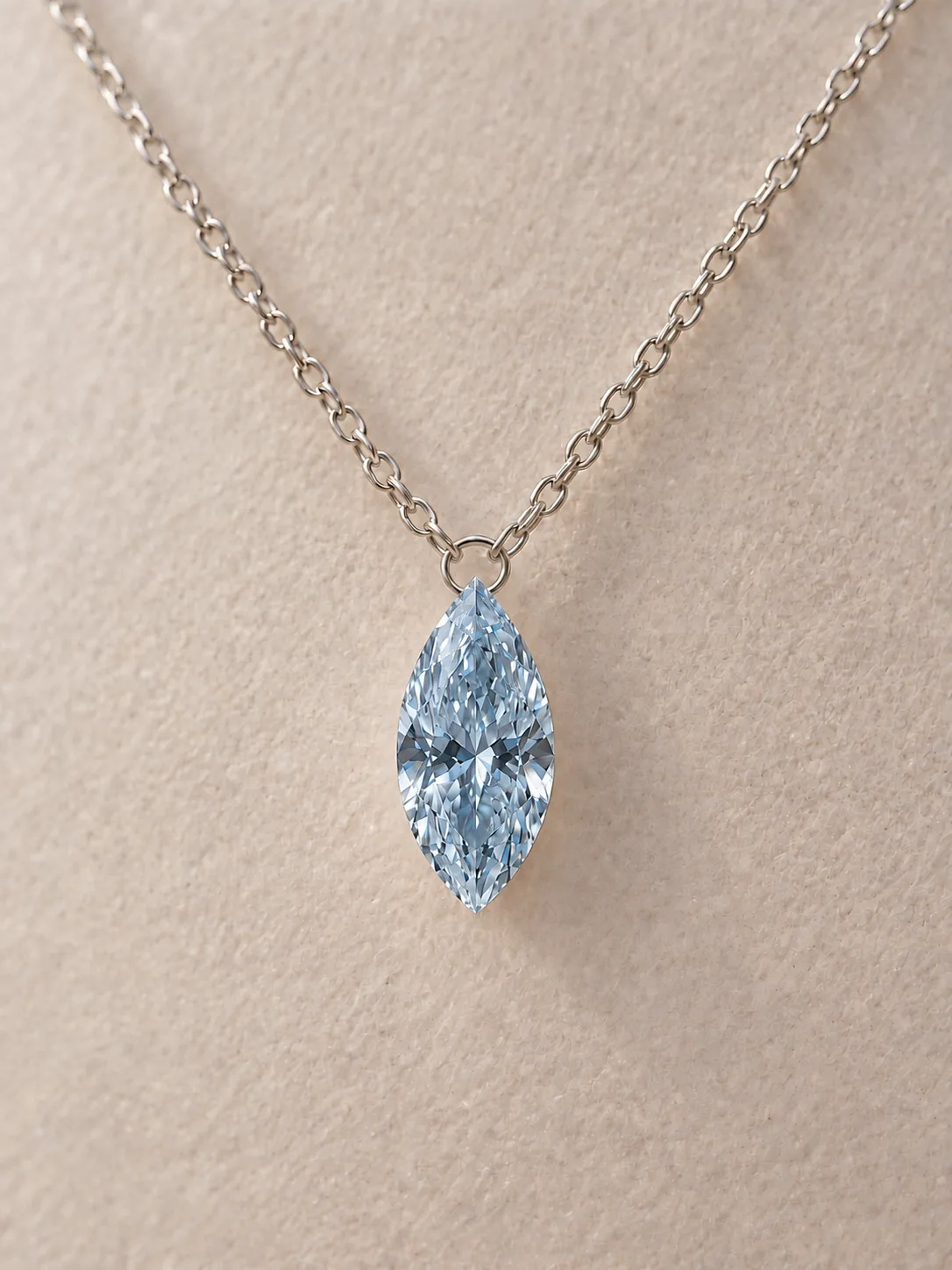
Boron is a familiar cause of blue color in diamond. When it substitutes for carbon in the crystal, it can change the stone's absorption of light. GIA's study of natural blue, gray, and violet diamonds also describes other causes in this color family, including radiation related defects and mechanisms involving hydrogen. [2]
That range of causes is a reason to be precise at the jewelry counter. Blue describes an appearance. It does not establish a boron concentration, a natural origin, or an absence of treatment. A seller explaining an individual diamond should use the documentation for that stone rather than turn a general scientific explanation into a claim about it.
Pink and brown can come from structural changes
Many natural pink diamonds owe their color to crystal deformation. Stress at high temperature can change the arrangement of the lattice. GIA's 2018 research links the common pink absorption feature to this deformation, while noting that the precise defect responsible had not been identified. [3]
Brown color can also result from deformation. Clusters of vacant carbon positions can absorb light across a broad range of wavelengths. Pink and brown can occur together, and the combined absorption affects the final appearance. These mechanisms explain why a diamond's color history can involve structural changes after its initial growth. [3]
Green shows why color origin can be difficult
Exposure to radiation in the earth can displace carbon atoms and leave vacant positions in a diamond. Certain vacancies absorb light in a way that produces green color. Other mechanisms involving impurities can also create green hues. [4]
Laboratory irradiation can produce defects similar to those created naturally. GIA's research describes the difficulty of separating natural and treated green color in some stones. This is a particularly clear example of why an attractive appearance and a confident seller's description cannot substitute for a laboratory conclusion. A scientific report should preserve uncertainty when the evidence does not settle the question. [4]
How laboratory grown diamonds become colored
Laboratory grown diamonds have the diamond crystal structure, and their color also depends on impurities and defects. Growers can influence these through the growth environment. GIA has documented yellow HPHT material colored by nitrogen and blue HPHT material deliberately grown with boron. Color can also be changed after growth. [5]
Pink laboratory grown diamonds illustrate another route. Nitrogen vacancy centers, which combine a nitrogen atom with a neighboring vacant position, can produce pink color. GIA's 2018 review describes these centers as a major explanation for treated and laboratory grown pink diamonds. This differs from the common deformation mechanism in natural pink diamonds. [3]
The terms CVD and HPHT describe growth methods. HPHT can also describe a separate treatment applied to a diamond that already exists. GIA's 2024 review discusses HPHT treatment of CVD material to reduce brown coloration. A CVD diamond can therefore also have undergone HPHT processing; those descriptions are not contradictory. [5]
For someone comparing jewelry, the useful follow through is to ask which description applies to the stone being offered. A growth method does not automatically tell you the treatment history or the final color grade.
Treatments can change color after growth
Irradiation introduces changes in the crystal that can alter color. Annealing uses controlled heating and cooling, sometimes after irradiation, to change the defects present. HPHT treatment applies high pressure and temperature to an existing diamond. The outcome depends on the starting material and its defects. [6]
Coating is different: material applied to the surface changes the appearance without the same alteration inside the crystal. GIA distinguishes coatings from stable treatments and notes that coatings can wear or be damaged. Irradiated diamonds can also need precautions during jewelry repair because some colors are sensitive to heat. Care advice should match the documented treatment and the finished piece. [6]
Treatment is information a buyer needs before deciding. It should be disclosed clearly, along with any relevant handling instructions. Neither a natural diamond nor a laboratory grown diamond should be assumed untreated simply because its color looks convincing.
Hue, tone, and saturation describe different things
Hue is the color itself. Tone describes how light or dark it is. Saturation describes its strength. GIA's fancy color system considers these together. Terms such as Fancy Light, Fancy Intense, and Fancy Vivid describe combinations of tone and saturation rather than a simple sequence from pale to dark. [7]
Imagine two pink diamonds, one pale and one much darker. That observation does not by itself tell you which has the stronger saturation, which you would prefer, or whether they share a color grade. Darkness and color strength are separate descriptions. It is worth asking what you actually like about each stone before reducing the comparison to a single adjective.
The familiar D to Z scale takes a different approach: it describes the relative absence of color in its range. Fancy color grading describes the presence of color. A vivid pink diamond is not simply farther down the D to Z scale. [7]
Cut and lighting affect what you see
A cutter can influence how strongly a diamond presents its color. GIA explains that colored diamonds are often fashioned to emphasize their appearance when viewed from above. The priorities can differ from those used for a colorless diamond. Shape alone, however, is not a complete description of how an individual stone has been cut. [8]
Fluorescence is a separate effect: some diamonds emit visible light when exposed to ultraviolet light. Blue fluorescence can make certain yellowish diamonds appear more colorless in daylight. GIA grades under controlled conditions and advises examining appearance under different lighting. A fluorescence description is not the same as a body color grade. [9]
When comparing two pieces, start with the same lighting and background. Then look at each in another ordinary environment. Note whether the color appeals to you throughout the stone or only in a particularly bright view. A photograph can be useful for remembering a design, but a comparison based on differently lit images leaves an important variable uncontrolled.
Read the report for the question you are asking
Color grade and color origin are different questions. A grade describes appearance under a laboratory's system. A color origin conclusion addresses whether the color is natural or treated. In GIA's natural colored diamond services, the full grading report and the more limited identification and origin report do not cover identical information. The latter focuses on color grade and color origin. [8]
Check the report's exact title and scope before relying on it. For a laboratory grown stone, read the service description and the wording on that report; do not assume a report for natural colored diamonds applies. Ask the seller to explain any treatment comments and to provide the report for the actual stone being considered.
A report that describes a diamond also leaves separate questions about the finished necklace. The chain, attachment, and care instructions deserve their own answers. Color documentation should not be treated as approval of every part of a jewelry design.
A useful comparison at the counter
Consider a hypothetical comparison between two pink diamond necklaces. The first seller supplies a report with a color description and treatment comments. The second supplies only a color name and a photograph. Even if you prefer the second necklace's appearance, you have different amounts of information about the two stones.
Ask for comparable documentation before drawing a conclusion about their color origins. Then separate that question from your design preference. You can like a paler stone more than a stronger one, or prefer one outline to another. Those are personal decisions. Statements about growth and treatment need evidence.
For Floating Diamonds, color sits alongside the shape of the stone and the choice of gold in the design. Our catalogue uses white, yellow, pink, and blue as collection color descriptions. Those labels do not assign a laboratory grade or treatment history to an individual diamond. A buyer who needs that information should ask about the particular piece and its documentation.
Sources & context
Technical explanations cite primary GIA publications. Historical research dates are identified. The counter comparison is hypothetical. This company publication has not received outside scientific review, and the sources do not establish grades or treatment histories for our products.
- GIA research: Naturally colored yellow and orange gem diamonds, 2020
- GIA research: Natural color blue, gray, and violet diamonds, 2018
- GIA research: Natural color pink, purple, red, and brown diamonds, 2018
- GIA research: Natural color green diamonds, 2018
- GIA research: Laboratory grown diamonds, identification and products, 2024
- GIA: Understanding diamond treatments
- GIA: How fancy color grading differs from D to Z grading
- GIA: Fancy color diamond buyer's guide and report scope
- GIA: Diamond fluorescence and appearance