In this article
A laboratory grown diamond is still a diamond
CVD stands for chemical vapor deposition. HPHT stands for high pressure, high temperature. Both are methods of growing diamond crystals in a controlled environment. A growth method explains part of a stone's origin. It is not a quality grade.
Laboratory grown diamonds have the diamond crystal structure, made of bonded carbon atoms. Diamond simulants such as cubic zirconia and moissanite are different materials. Growing a material in a laboratory does not make it a simulant; its identity depends on what material was grown. GIA makes this distinction in its explanation of simulants and laboratory grown diamonds. [1]
At the counter, it helps to settle the identity question before comparing growth methods. A customer asking whether a stone is a diamond needs a different answer from someone asking how a confirmed laboratory grown diamond was produced. Combining those questions can leave the customer with a correct acronym and the wrong understanding.
How HPHT growth works
An HPHT growth system uses a press containing a carbon source, a diamond seed, and a metallic flux. The flux helps dissolve the carbon under the conditions inside the growth capsule. Carbon travels through that material and crystallizes on the seed. GIA's detailed HPHT review describes a temperature difference between the carbon source and the cooler seed as part of this process. [2]
Some HPHT grown diamonds contain remnants of the metallic flux within the crystal. GIA's review discusses those inclusions among the characteristics observed in its samples. That possibility is not a clarity description for every HPHT diamond. A characteristic that helps explain how some crystals grew should not be assigned to a stone that has not been examined. [2]
The seed gives the new crystal a starting structure. It is useful to picture the operation as growing a crystal onto that starting point, rather than pressing an already finished necklace stone into existence. Cutting and finishing still have to produce the gem that a jeweler evaluates.
The equipment name does not tell you whether you will prefer the finished diamond. A description of the press cannot replace measurements or an examination of the stone in the piece you are considering.
How CVD growth differs
CVD starts with a diamond substrate in a chamber containing a heated mixture of hydrogen and a hydrocarbon gas, such as methane. An energy source, typically a microwave plasma, breaks apart gas molecules. Carbon reaches the cooler substrate and diamond grows layer by layer on its surface. GIA's 2016 CVD review describes this process and the flat seed plates used for growth. [3]
This is a gas based route to growing a crystal, compared with the molten flux route used in HPHT. The material coming out of the chamber still needs further work to become a polished gemstone. GIA's review describes laser cutting of the outer edge of the grown tablets, followed by gem polishing. [3]
The distinction between a grown crystal and a finished gem helps when reading a manufacturing description. A statement about the chamber explains how material was produced. To compare two necklace stones, you still need the characteristics of the finished gems and a view of them in the designs.
A useful seller explanation should connect the method name to the individual stone. If the only available information is that a collection uses laboratory grown diamonds, an article about CVD cannot establish that every diamond in that collection was grown by CVD.
Why HPHT can appear twice in the conversation
HPHT can also describe treatment after a diamond has grown. GIA's 2024 research review explains that HPHT treatment can reduce brown coloration in CVD grown diamonds. Growth and treatment are distinct operations, even when the initials used for one growth method appear in the treatment description of another. [4]
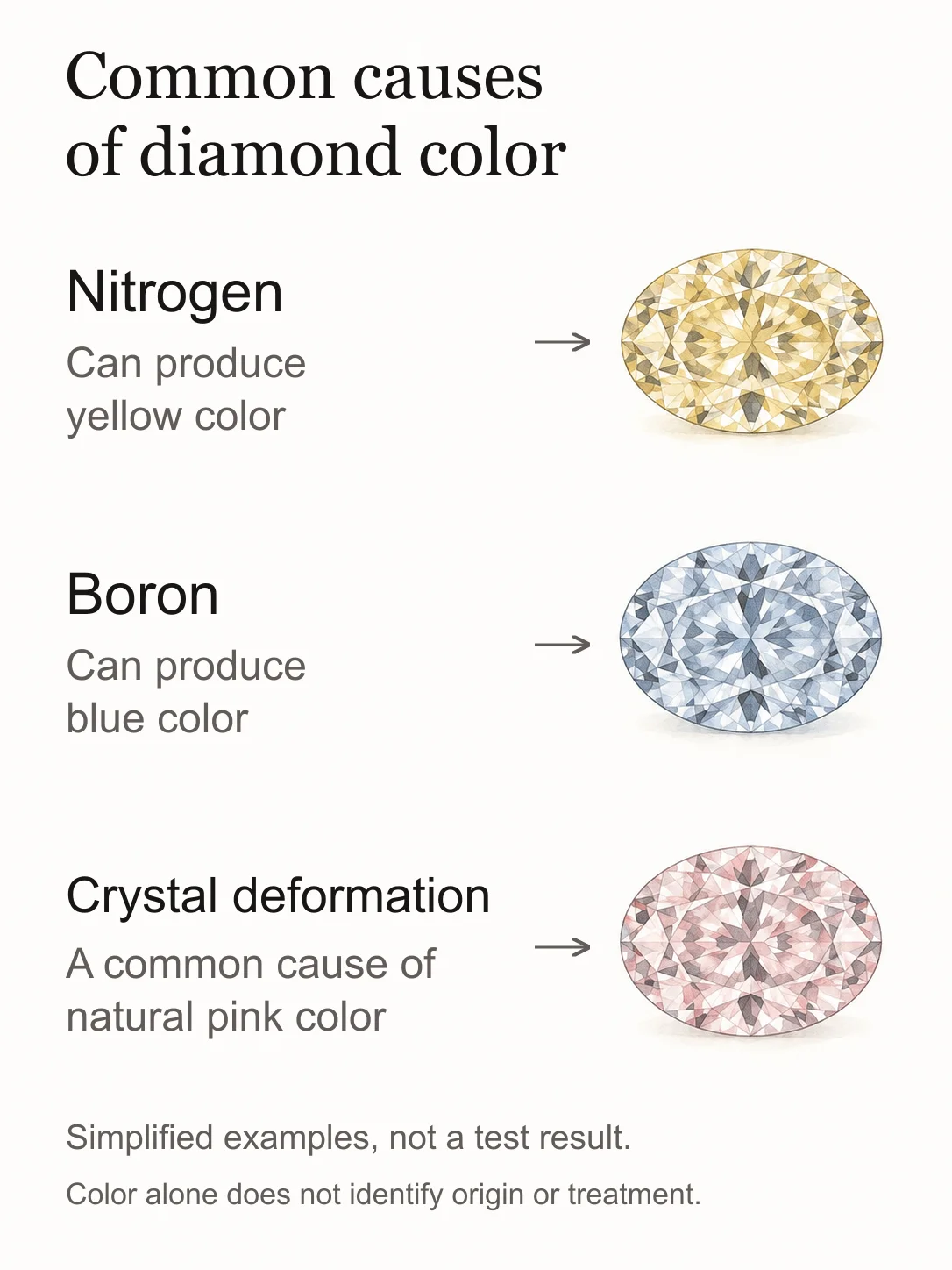
The review relates brown coloration in some CVD material to defects in the crystal, including vacancy clusters. It also explains that HPHT treatment does not synthesize additional diamond material. Treating an existing diamond and growing a new crystal are different events in its history. [4]
A document can therefore identify CVD as the growth method and HPHT as a later treatment without contradicting itself. One statement describes how the crystal was made; the other describes subsequent processing. Read both before explaining the stone to someone else.
Do not turn a missing treatment comment into an untreated claim. IGI's current report overview says growth process and treatment information may be included in the comments upon request. The document in front of you, its scope, and any clarification from its issuer matter more than a general expectation about what a report should contain. [5]
Can appearance reveal the method?
GIA's 2024 review describes identification using combinations of gemological observations and advanced analytical techniques. It also explains why a single feature should not be treated as conclusive across all growth recipes and treatments. [4]
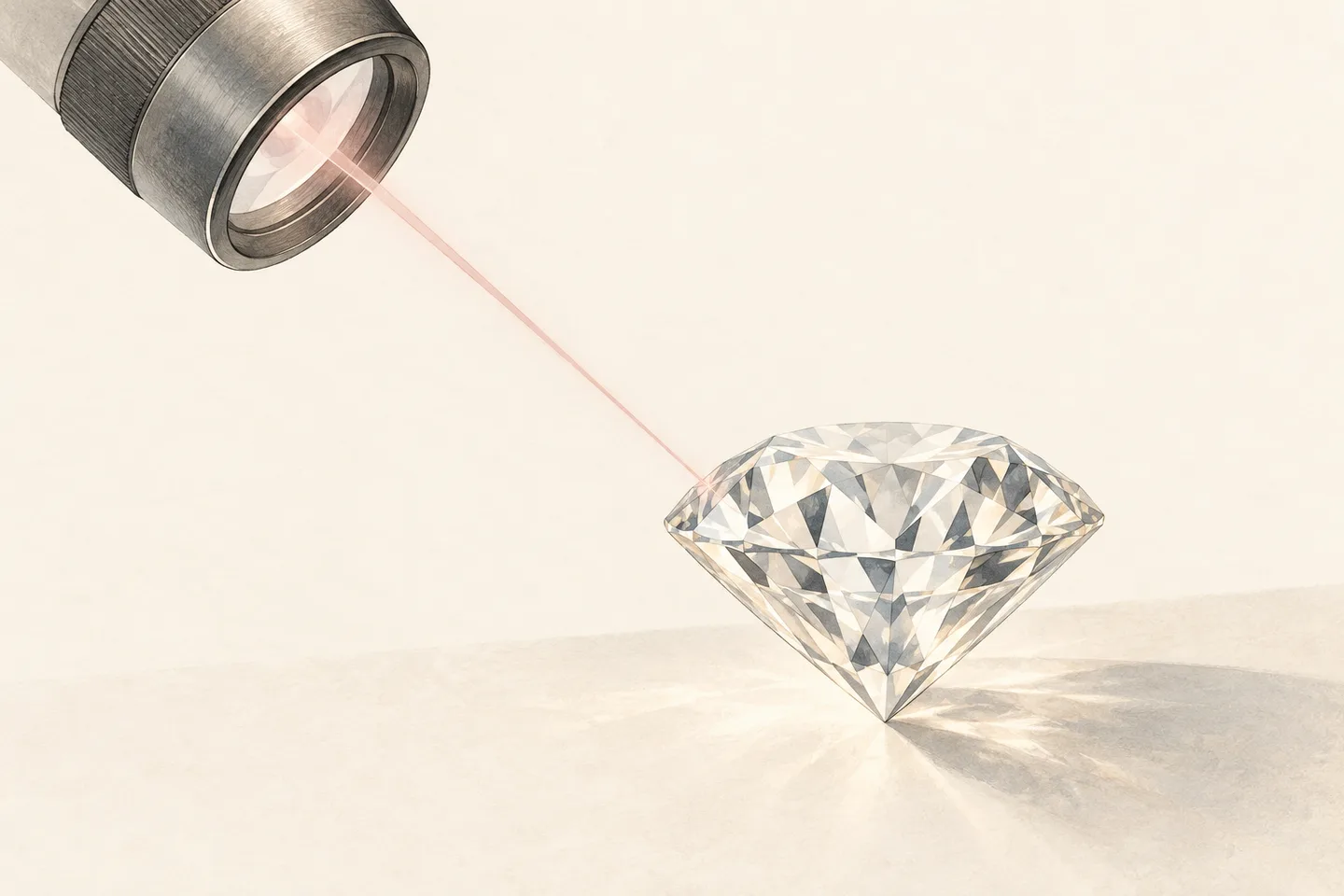
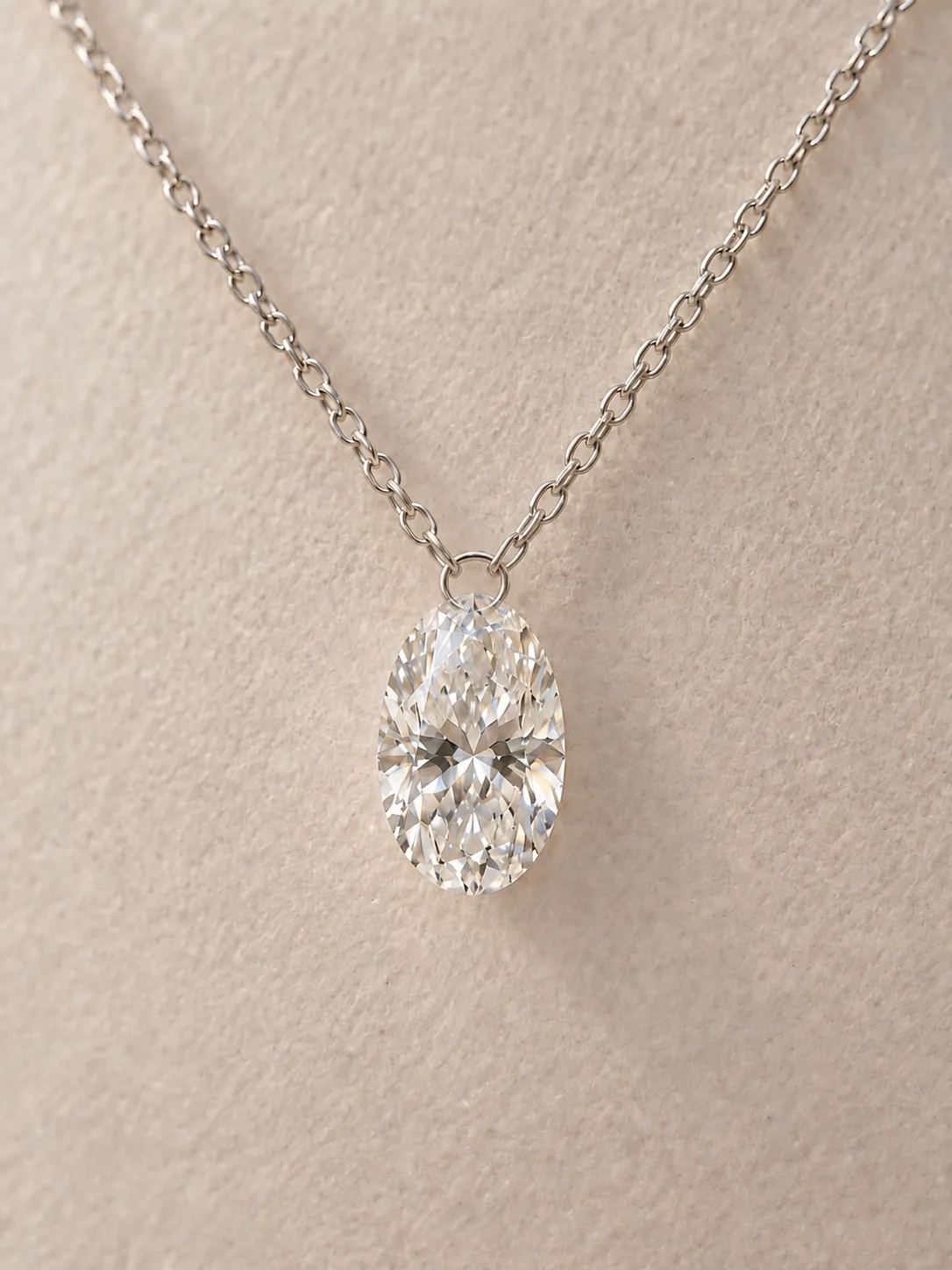
A photograph of a white diamond is therefore not a growth method record. Neither is a casual comparison of two finished necklaces. A picture can help someone choose a shape or see the design, while a laboratory document can answer questions about the submitted stone within the scope of that examination.
If identification is important to the decision, ask how it was established. An answer should identify the relevant document or examination instead of relying on how convincing the diamond looks.
Reports do not all use the same format
Check the issuing laboratory, document type, and date before comparing the results. In its August 2025 announcement, GIA described an assessment launching October 1, 2025 for laboratory grown diamonds in the D to Z color range. It uses Premium and Standard descriptions based on combined quality criteria. That is a different presentation from an older report listing individual color and clarity grades. [6]
This change does not make two documents interchangeable because both carry a laboratory name. Read the actual fields and the explanation of the service. If comparing a descriptive assessment with a report using individual grades, ask which characteristics each document states and which it leaves unstated.
IGI's report overview describes assessment of laboratory grown identity and individual quality characteristics. It also distinguishes reporting for finished jewelry, where the mounting can limit assessment. Read a report as evidence about its stated subject, not as a blanket guarantee for every part of a necklace. [5]
A practical comparison at the counter
Suppose you are comparing two necklaces and the seller describes one diamond as CVD grown and the other as HPHT grown. This is a hypothetical comparison, not a description of two Floating Diamonds items. Begin by asking for the documentation supplied with each exact piece.
Separate the information into origin, any treatment comments, and the characteristics actually assessed. Then examine the necklaces. You might prefer one stone's outline or the way its chain meets the diamond. That design preference can be genuine even if the growth method did not decide it.
If one document is more detailed, explain the difference in evidence rather than assuming its stone is better. An unanswered question about the other piece remains unanswered until the seller supplies the information. It should not become a negative fact invented to complete the comparison.
Before deciding, ask the seller to resolve the specific gap: the growth method, a treatment comment, or the scope of the report. Environmental claims, future resale value, and the durability of a finished necklace require separate evidence. CVD and HPHT are a useful beginning to the conversation, but they cannot answer those questions on their own.
Sources & context
GIA and IGI explain the industry processes discussed here. Their articles do not certify or endorse our collection. Check the current documentation for any individual stone.
- GIA: Simulants, Moissanite and Laboratory Grown Diamonds
- GIA: Observations on HPHT Grown Synthetic Diamonds, Fall 2017
- GIA: Observations on CVD Grown Synthetic Diamonds, Fall 2016
- GIA: Laboratory Grown Diamonds, An Update on Identification and Products Evaluated at GIA, Summer 2024
- IGI: Laboratory Grown Diamond Report and Services
- GIA: Updated Laboratory Grown Diamond Services, August 26 2025