In this article
What do I notice first?
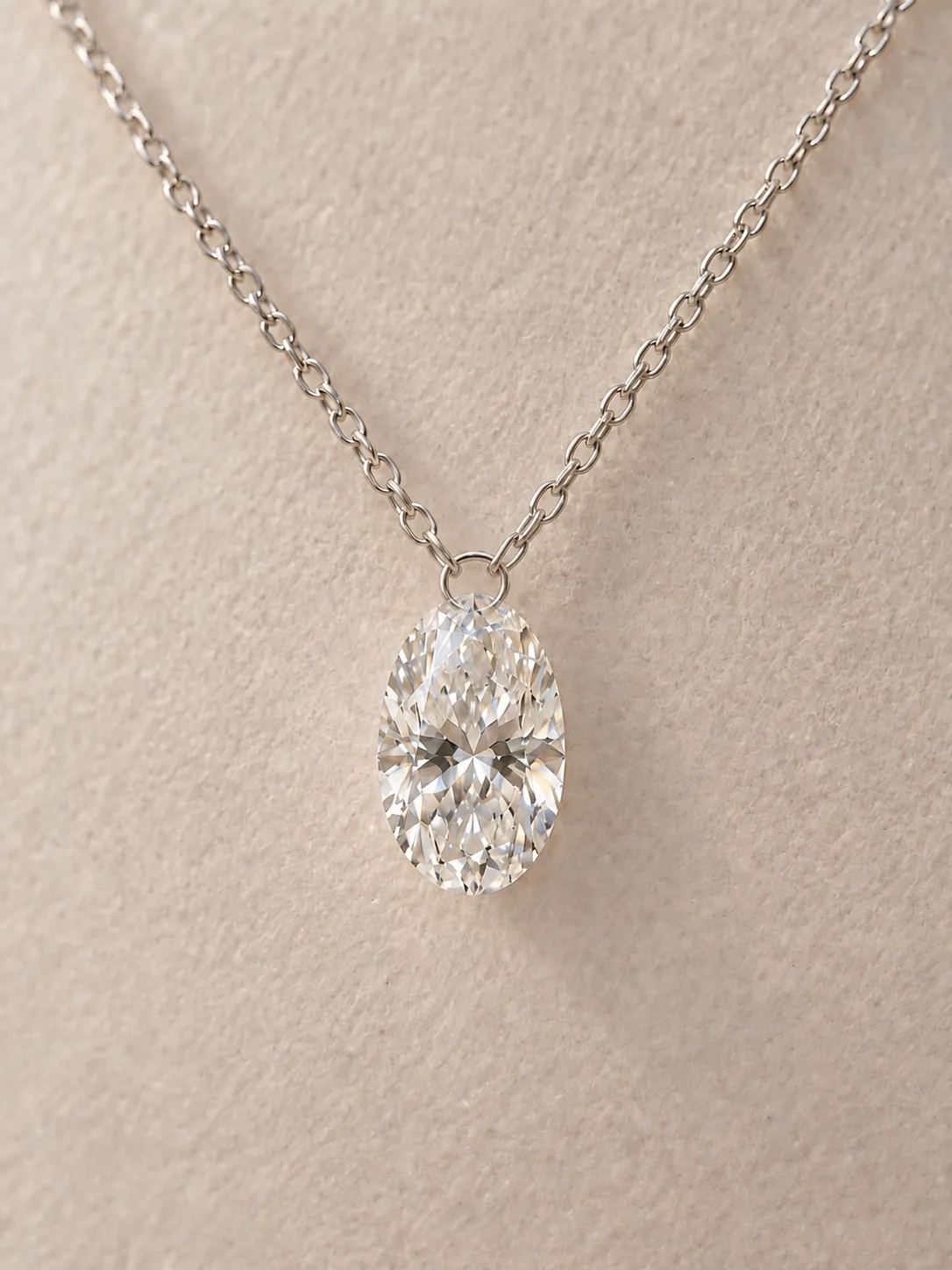
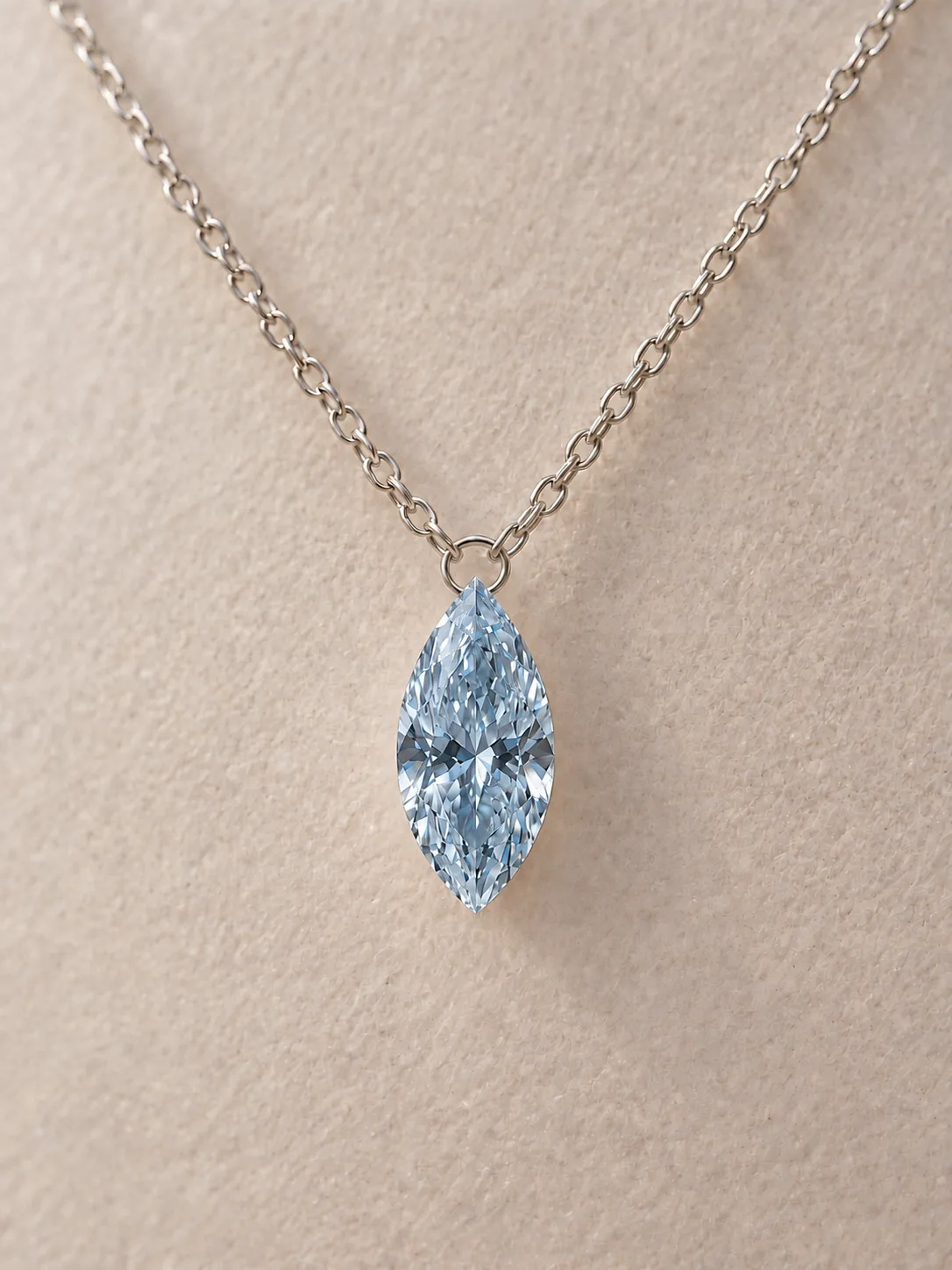
Look at the piece before reading its description. Notice the diamond's outline, the metal around it, and where it meets the chain. Try describing what you like in ordinary words. This gives you a preference to test against the actual piece instead of borrowing the language of an advertisement.
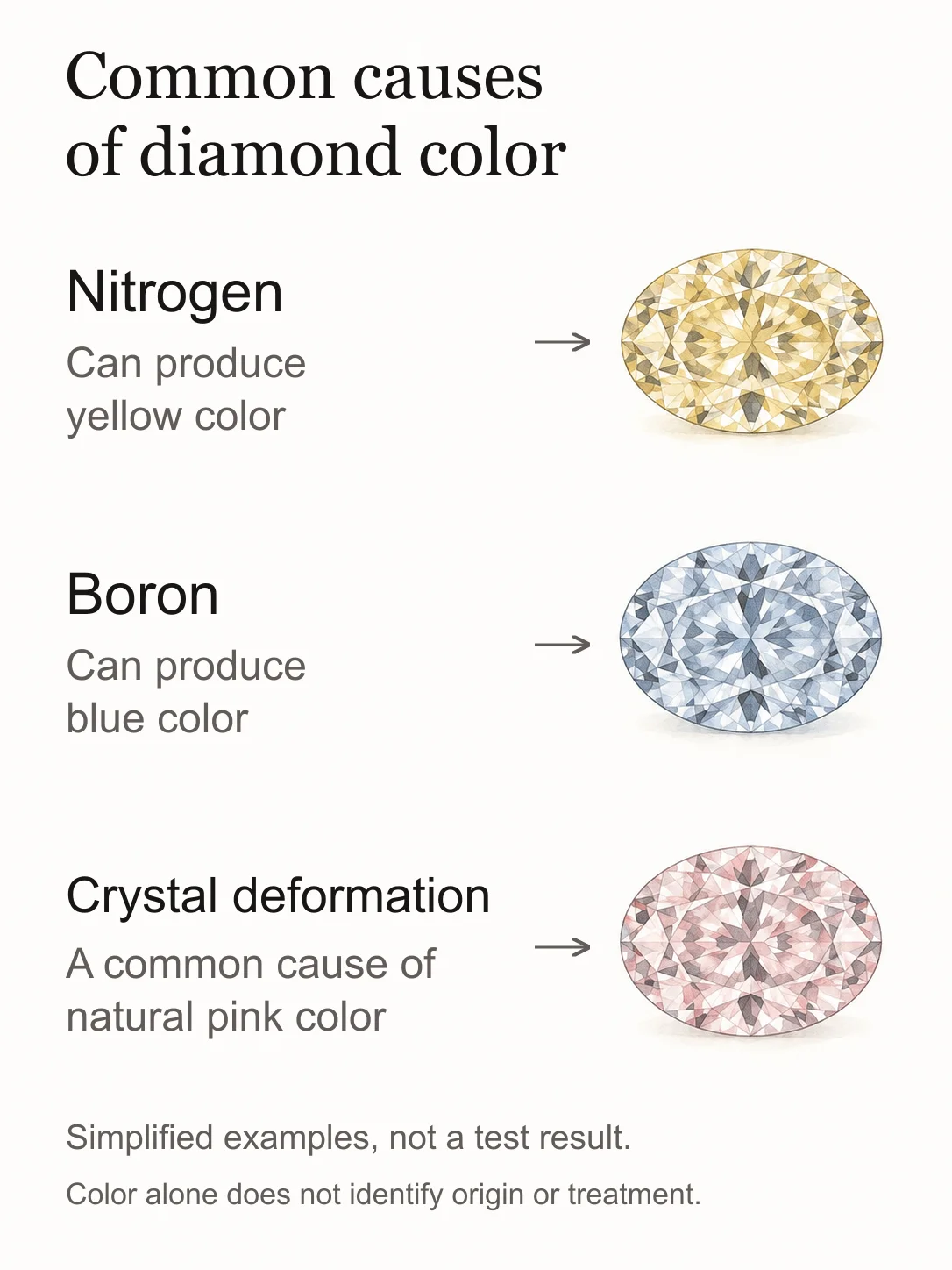
Shape and cut need separate attention. GIA describes shape as the stone's outline and cut as its facet arrangement. An oval outline answers a different question from an assessment of how the facets interact with light. A familiar shape name is not a complete description of the diamond. [1]
Examine the piece from the front and the reverse. Ask to see the attachment rather than relying on a single flattering view. If the seller is showing a rendering, use it to understand the composition, then ask what actual product viewing is available before drawing conclusions about physical details.
With Floating Diamonds, we want the traditional setting and prongs to visually disappear so the diamond appears to float. That is our design preference. Someone else may prefer metal to be prominent around a stone. A useful comparison lets you see both approaches without treating one preference as a laboratory fact.
If you are stocking a collection, also consider how you will show the piece at your counter. Can a customer see the feature that first interested you? Can staff explain it without repeating an unclear slogan? A design that takes careful explanation should still be something the customer can examine.
What is included?
Check whether the description covers a complete necklace, a pendant, a loose stone, or an earring pair. Do not assume a chain is included because it appears in a picture. Ask which components are part of the purchase and which are shown for presentation.
Carat describes gemstone weight. One metric carat equals 0.2 grams. Karat, as in 14K gold, describes gold purity; it is a different measurement. GIA explains this distinction in its carat weight guide. Neither term, by itself, gives you the dimensions of a finished necklace. [2]
Ask what the stated diamond weight includes. A center stone weight and the combined weight of several stones are different descriptions. For an earring pair, check whether a number applies to one earring or both. Write down the answer if you are comparing pieces from different sellers.
Our current necklaces are two carat set weight and include their 14K gold chain. Our listed earring pairs are four carat total set weight. These are Floating Diamonds collection details, not conventions to assume for another seller's products. Confirm the exact item description rather than transferring a specification from one design to another.
Dimensions deserve their own question. Ask for the diamond's measurements and the necklace's chain length where these affect your choice. If you need a particular length or an adjustment, resolve it before buying. The picture and the diamond weight do not supply an answer the seller has not given.
What can the seller actually document?
Ask what documentation comes with the exact piece. A laboratory document about a diamond and a seller's description of a necklace can both be useful, but they answer different questions. Identify the subject of each before treating it as evidence for the complete purchase.
IGI's report reading guide identifies fields such as origin description, shape, cutting style, measurements, and quality assessments. Depending on the document, proportions or clarity diagrams may also be present. Read the actual fields rather than assuming every report supplies the same information. [3]
Mounted jewelry requires particular care in reading the scope. IGI describes its jewelry reports as identifying mounted gemstones and precious metal information, while noting that center stone assessments are made as the mounting permits. This is a reason to read the limitations, not to dismiss the document or imagine it says more than it does. [4]
A company history can explain how a design began. It does not establish a grade. A rendering can show the proposed appearance, but it cannot document a particular stone's treatment history. If a seller makes an environmental or performance claim, ask for evidence specific to that claim.
Retailers should keep this separation in their own descriptions. Use the supplier's verified item details for the item, the laboratory's actual findings for the stone, and clearly attributed company history for the origin story. An unclear claim should be resolved before it becomes something a salesperson repeats to a customer.
What would help me decide?
Name the uncertainty that is stopping the decision. You may want to compare two outlines, see the necklace in person, or understand the included chain. Asking for everything can produce a pile of material without answering the one question you had.
Care and service deserve written answers for the item. Ask how the seller recommends cleaning it, what activities require removing it, and whom to contact if it needs attention. Do not transfer instructions from a different necklace just because both contain diamonds.
Read any return, repair, or warranty terms supplied before purchase. Ask who provides the service and what the terms cover. A general statement about craftsmanship does not explain a repair procedure or establish an entitlement that has not been offered.
For a retailer, the decision also includes what happens after a customer asks something unfamiliar. Decide which questions staff can answer from verified records and which must go back to the supplier. It is better to check a detail than to give a confident answer based on an assumption about a new construction.
Putting the questions to work
Consider a hypothetical comparison between a necklace with one two carat diamond and an earring pair containing two one carat diamonds. Both descriptions involve two carats, but the weight is distributed differently. The example is not a description of our earring collection; it shows why the number needs context.
Next, suppose one listing includes its chain and the other shows a pendant on a chain sold separately. Comparing only the diamond weight would miss a component of the purchase. Record what each description actually includes before deciding whether the offers are comparable.
Then look at the documents. If one is a stone report and another assesses finished jewelry, identify what each covers. Request any information you still need about identity, materials, and service. A longer specification sheet is only useful when its statements can be tied to the piece in front of you.
Finish with a short note in your own words: the design you prefer, the components included, the evidence supplied, and the question still unanswered. If that last question matters to the purchase, have the seller resolve it before you decide.
Sources & context
Our evaluation advice is editorial perspective. Definitions and report scope cite GIA and IGI. Floating Diamonds collection details come from company records. The comparison examples are hypothetical. Confirm availability and service terms for the specific item with the retailer.